NHTSA Study: Backup Cameras Prevent About 65% of Pedestrian Backover Crashes
Backup cameras have been required on new cars for years now, and a new federal study puts a number on how much they help. In an October 2026 evaluation, the National Highway Traffic Safety Administration (NHTSA) estimates that rearview camera systems are 65.2% effective at preventing crashes in which a backing vehicle strikes a pedestrian. For drivers in Glen Ellyn, Wheaton and across DuPage County, where most backing happens in driveways and busy shopping-center lots, the study is a good reminder of what the camera does well and where it still needs your help.
What NHTSA studied
A backover crash happens when a vehicle moving in reverse strikes a person, an object or another vehicle. Federal rules (Federal Motor Vehicle Safety Standard No. 111) require all new vehicles with a gross vehicle weight rating of 10,000 pounds or less built on or after May 1, 2018, to display a rearview image that meets minimum field-of-view requirements. The rule grew out of the Cameron Gulbransen Kids Transportation Safety Act of 2007.
Because most backovers happen on private property, ordinary crash databases often miss them. NHTSA instead used its Non-Traffic Surveillance system, which tracks crashes in places like driveways and parking lots, covering 2016 through 2021, and compared pedestrian backovers involving vehicles with and without factory-installed rearview camera systems.
The key findings
- About 65% effective: NHTSA estimates rearview image systems are 65.2% effective in preventing pedestrian backover crashes, after adjusting for vehicle type (95% confidence interval: 51% to 75.2%).
- Lower odds of being struck: pedestrians had 60% lower odds of being hit by a backing vehicle that had a rearview camera system than by one without.
- Bigger vehicles, higher odds: light trucks and vans, a group that includes SUVs and pickups, had statistically higher odds of pedestrian backover crashes than passenger cars.
- Sensors alone did not show a clear effect: rear object detection systems that beep instead of showing an image did not show a statistically significant independent effect once other factors were accounted for.
The scale of the problem is real. NHTSA’s non-traffic data for 2016 to 2021 recorded 66,000 backover crashes in which 1,555 pedestrians were killed. More than 85% of those backover crashes happened in residential locations or commercial parking lots. The report also notes that young children and older adults are hit disproportionately, and that blind zones behind larger vehicles can hide a small child completely.
Where the camera still needs you
NHTSA is careful about what its numbers do and do not cover. The study did not account for cameras that were damaged, recalled or blocked, for example by dirt, snow or cargo, and it could not measure driver behavior. That matters, because a camera only helps if the driver looks at it and reacts. The report cites earlier lab research in which only 20% of drivers looked at the rearview display before backing up.
What this means for DuPage drivers
Here’s our take: the camera is one of the most useful safety features on your car, and a Chicagoland winter makes it easy for that camera to get covered up.
- Keep the lens clean. Road salt, slush and snow can cover a backup camera fast in a Chicagoland winter. Wipe the lens before you back out, the same way you clear your windows. Our cold-weather car checklist has more winter prep tips.
- Look before you back. Walk around the vehicle in the driveway when kids or pets could be nearby, then use the camera and your mirrors and look over your shoulder.
- Back slowly in parking lots. NHTSA found most backovers happen in driveways and parking lots, so take reversing out of a space slowly and watch for people walking behind you.
- Know what your car has. Check your owner’s manual to see whether your vehicle has a camera only, parking sensors, or rear braking features, and how each one works.
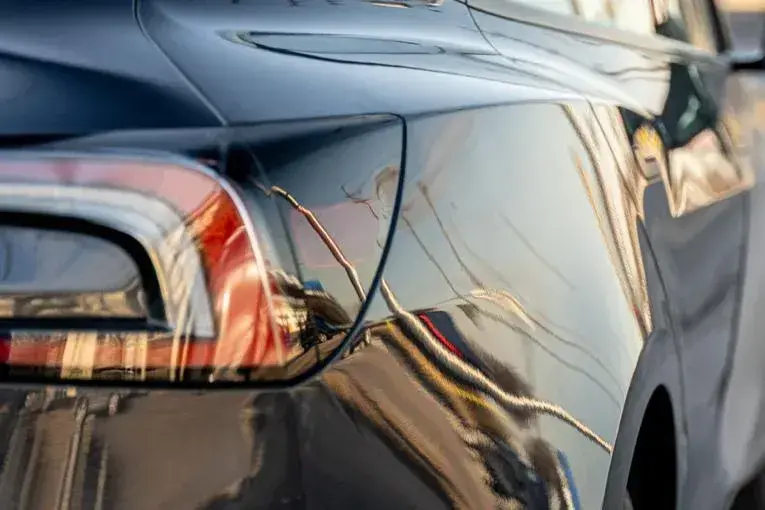
Low-speed backing bumps in parking lots and driveways can also leave dents in bumpers, trunk lids and rear quarter panels. A dent where the paint is still intact is often a candidate for paintless dent repair, which reshapes the metal without sanding or repainting. Scrapes, cracked paint and bigger damage usually call for dent and scratch repair or collision repair. An inspection decides which fits.
Our team at EZ Tech Paintless Dent Removal & Collision repairs everything from parking-lot dings to collision damage across Chicagoland. If you are near Glen Ellyn, stop by our Glen Ellyn shop, or find the closest one on our locations page. We’re happy to show you what we find and walk you through your options. This article is general information, not legal or insurance advice.
Sources: NHTSA, “Evaluation of the FMVSS No. 111 Rearview Image Requirements in Mitigating Backover Crashes” (Report No. DOT HS 813 831, October 2026, doi:10.21949/e781-cm84); Advocates for Highway and Auto Safety, “Statement on New Study from NHTSA on Rearview Image Requirements in Mitigating Backover Crashes” (November 9, 2026). Accessed November 14, 2026.
Related services
Got a bumper dent from a parking-lot backing bump? Get your free quote or call us toll-free at (833) 439-8324.