Scott’s Law and Crash Responder Safety Week: How Illinois Drivers Should Move Over
This is Crash Responder Safety Week, a national campaign running November 2 through 6 that asks every driver to slow down and move over for the people working at crash scenes and along the shoulder. In Illinois, that request is also the law: Scott’s Law, the state’s Move Over Law. The Illinois State Police (ISP) reported its 13th Move Over Law-related crash of 2026 on October 22, and a new AAA Foundation survey shows a gap between what drivers say they do and what they actually do. Here is what the week is about, what the latest numbers show, what Illinois law requires, and a few habits that help on DuPage County roads.
What Crash Responder Safety Week is
The Federal Highway Administration started Crash Responder Safety Week a decade ago, and it now takes place every November. The 2026 theme is “Slow Down, Move Over. Lives are on the Line!” The campaign covers everyone who responds to traffic incidents, including EMS, police, fire and rescue crews, public works and transportation workers, and towing and recovery operators. Its main message to drivers is simple: slow down, move over and stay alert whenever you approach a stalled vehicle, a crash or crews clearing debris.
The latest Illinois numbers
On October 22, an ISP trooper was conducting truck inspections on the right shoulder of northbound IL-40 in Rock Falls with the squad car’s emergency lights on. As the trooper opened the driver’s door to get out, a passing box truck failed to move over and struck the door. ISP said neither the trooper nor the truck driver was injured, and the driver was cited for improper passing of a stationary emergency vehicle causing property damage.
ISP said that was its 13th Move Over Law-related crash of 2026, with two troopers injured so far this year. For comparison, the agency reported:
- 2025: 15 Move Over Law-related crashes, with seven troopers injured.
- 2024: 27 Move Over Law-related crashes, with 12 injuries.
Those counts cover crashes involving ISP squad cars only. Tow trucks, ambulances, fire trucks, road crews and stranded motorists face the same risk on the shoulder.
What drivers say vs. what they do
A survey released October 15 by the AAA Foundation for Traffic Safety found strong support for move over laws, but a gap between awareness and behavior:
- Most drivers think they comply. More than 90% of drivers said they moved over and/or slowed down the last time they passed a disabled vehicle, tow truck or police car on the shoulder.
- Observed behavior is lower. Earlier AAA Foundation research found only 64% of vehicles subject to these laws were seen changing lanes and/or slowing down; 36% did neither.
- Support is high. When the laws were explained, 90% of drivers supported them and only 2% opposed them.
- Awareness has gaps. Only 66% of drivers believed their state law required special action near a stopped police car.
AAA notes that in 33 states and Washington, D.C., move over laws apply to all vehicles with flashing or hazard lights. “Drivers should look ahead, move over when safe, slow down when they cannot, and pass carefully,” said Dr. William Van Tassel, AAA Senior Driver Training Manager.
What Illinois law requires
Scott’s Law is in the Illinois Vehicle Code at 625 ILCS 5/11-907. In plain terms:
- Change lanes if you can. When you approach a stationary emergency vehicle or emergency scene with flashing lights on a road with at least four lanes and two or more going your way, you must slow down and move into a lane that is not next to the stopped vehicle, if that is possible and safe.
- If you can’t move over, slow down. If a lane change is impossible or unsafe, you must reduce speed, proceed with caution and leave a safe distance until you are past the scene.
- It covers more than police cars. The law applies to any vehicle authorized to use flashing lights while on duty. ISP lists police vehicles, ambulances, fire trucks, tow trucks and road repair vehicles, and ISP says drivers must also slow down and move over for any vehicle with its emergency or hazard lights on.
- Yield to people at the scene. Drivers must yield to emergency workers and to any pedestrian directly involved in an emergency scene.
- Penalties climb with the harm. A violation carries a fine. If it damages another vehicle, it is a Class A misdemeanor and driving privileges are suspended for 90 days to one year; if it injures someone, it is a Class 4 felony with a suspension of 180 days to two years. Driving under the influence or using a phone while committing the violation counts as an aggravating factor.
What this means for you
Here’s our take: on I-88, I-355 and Route 59, flashing lights on the shoulder are a near-daily sight, and earlier sunsets this month make them harder to judge. A few habits help:
- Look far ahead. Spotting lights early gives you time to check your mirrors and change lanes smoothly instead of swerving at the last second.
- Ease off early. AAA advises drivers to ease off the accelerator as soon as they see flashing lights, hazard lights or a stopped vehicle, and to be ready to pass with caution.
- Treat hazard lights the same way. A stalled car with its flashers on deserves the same space as a squad car.
- Keep the phone down. Expect slowdowns near any roadside scene. For more, see our distracted driving article and our Tollway work zone guide.
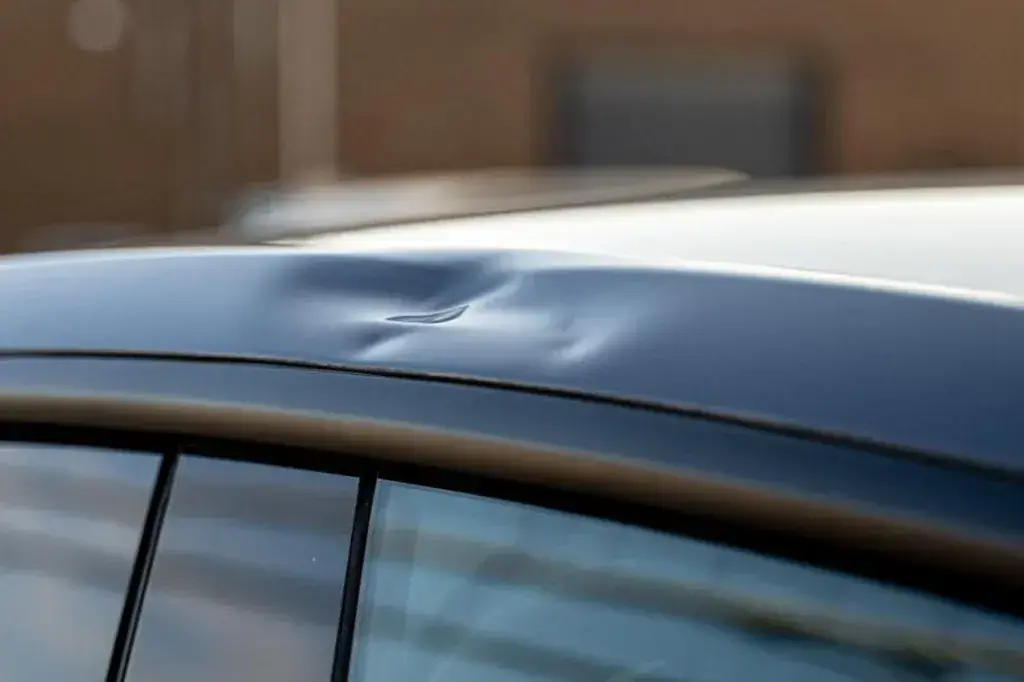
- Know what a near-miss can leave behind. From our side of the shop: sideswipes and quick swerves near the shoulder often leave creased doors, scuffed bumpers and scraped panels. A door dent with unbroken paint may be a fit for paintless door dent repair, while cracked paint or a torn bumper cover usually calls for collision repair.
Our team at EZ Tech Paintless Dent Removal & Collision is happy to look at any dents or scrapes and walk you through your options. This article is general information, not legal or insurance advice.
Sources: National Operations Center of Excellence, “Crash Responder Safety Week 2026: November 2-6”; Illinois State Police, “Illinois State Police Squad Car Struck On IL-40 in Whiteside County” (October 22, 2026) and “Scott’s Law: The Move Over Law” (brochure); AAA, “New AAA Foundation Survey Shows Where Drivers Fall Short on Roadside Safety” (October 15, 2026); Illinois General Assembly, 625 ILCS 5/11-907. Accessed November 4, 2026.
Related services
Door creased or bumper scraped after a close call on the shoulder? Get your free quote or call us toll-free at (833) 439-8324.