A lot of drivers hear “aluminum” and assume the panel has to be replaced. That is not always true.
Many aluminum body panels can be repaired, including dents on hoods, doors, fenders, liftgates, roofs, and quarter panels. The right fix depends on the kind of panel, how badly the metal moved, whether the paint is still intact, and whether the shop has aluminum-specific tools and training. On the flip side, some structural aluminum parts have tighter limits and are often replaced instead of repaired.
That distinction matters more now because aluminum is showing up on more late-model cars, trucks, SUVs, and EVs. Lightweight design helps with fuel economy and battery range, but it also changes how collision and dent repair needs to be done.
Why aluminum body panels are more common on modern vehicles
Aluminum use in vehicles has grown for years as automakers look for ways to cut weight without giving up strength where it counts. That is why technicians now see aluminum on more than just luxury vehicles. It is common on truck hoods, pickup bedsides, doors, liftgates, and other outer panels.
For drivers, the big takeaway is simple: aluminum damage does not automatically mean a more dramatic repair. A dented aluminum hood may still be a repair candidate. A stretched or torn aluminum panel may not. The material changes the process, not the goal.

Industry training has kept pace with this shift. I-CAR’s aluminum panel repair training covers non-structural aluminum repair methods that include hammer-and-dolly work, heat for straightening, glue pull methods, weld-on dent pulling, paintless dent repair, and corrosion prevention. That alone tells you something important: aluminum repair is repairable, but it is not repaired exactly like steel.
When aluminum body panels can be repaired
The best repair candidates are usually exterior panels with localized damage. Think parking lot dents, hail damage, shallow impacts, and panel damage where the metal has not been torn or folded sharply. If the backside of the dent is accessible, the paint is still flexible, and the panel has not been stretched too far, repair often stays on the table.
This is where people often get surprised. An aluminum dent in a door or hood does not always need body filler, sanding, and repainting. Shops that work with aluminum regularly often repair these dents while keeping the original finish, especially when paintless dent repair is a fit.
Good repair candidates often look like this:
- small to moderate dents
- intact factory paint
- open access behind the panel
- soft body line damage
- hail impacts
- shallow dents away from edges
Location matters almost as much as severity. Damage near reinforced edges, sharp body lines, latch areas, or bonded seams is harder to correct cleanly. A shallow dent in the center of an aluminum hood is one thing. A crushed corner on an aluminum liftgate is another.
Repair planning also changes when the panel is cosmetic versus structural. Outer aluminum skin panels usually give a shop more repair options. Structural aluminum parts, or parts attached in ways the automaker limits, call for much closer review of OEM procedures before anyone starts pulling, heating, or welding.
When aluminum panel replacement is the better option
There are clear cases where replacement is the safer move.
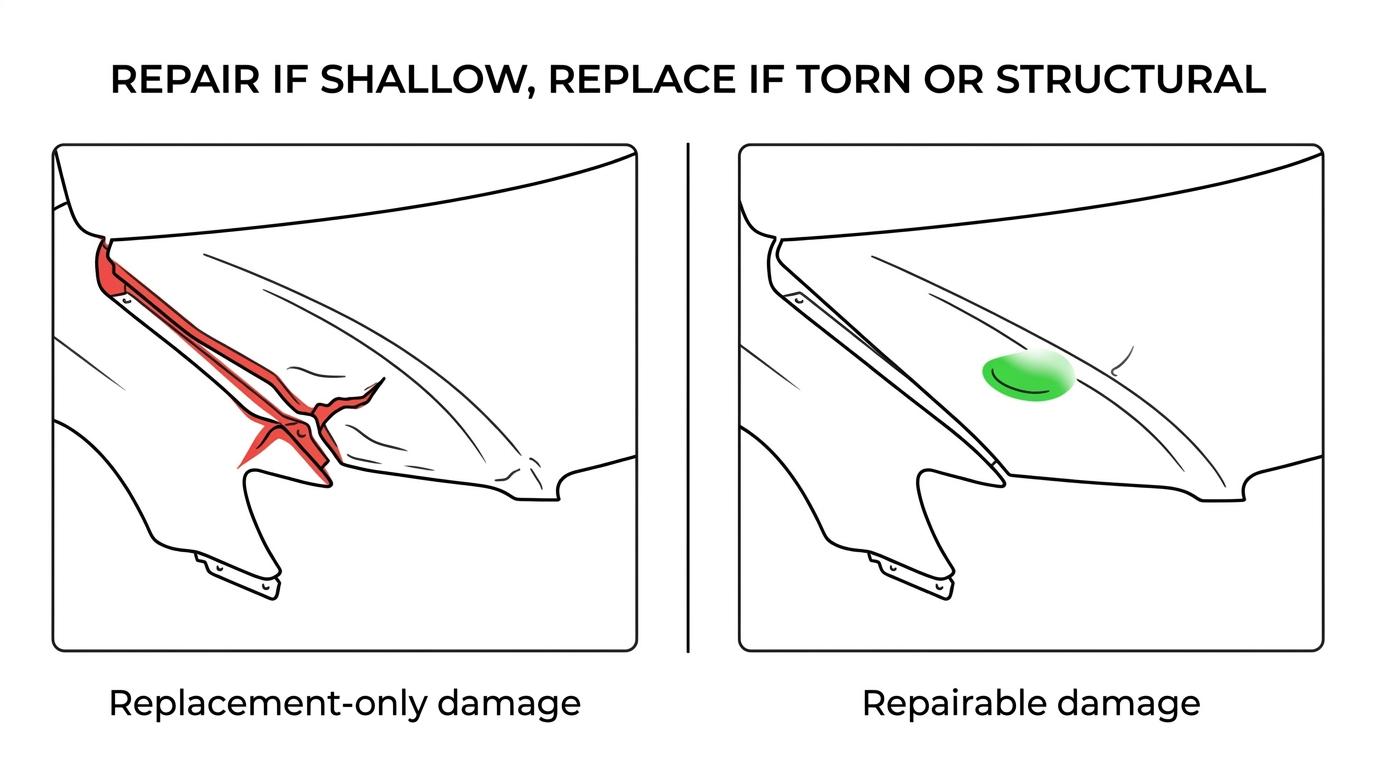
If the aluminum is torn, heavily kinked, sharply creased, badly stretched, or damaged in a way that affects fit and strength, replacement may make more sense than trying to force a repair. The same goes for damage that has compromised mounting points, crush zones, or structural geometry.
I-CAR has noted that structural aluminum parts have limited repair options and often need replacement. That is a major line between “repairable” and “probably not.” Drivers do not need to memorize those standards, but they should know that structural aluminum gets treated much more cautiously than a dented outer skin.
Here’s a simple way to think about it:
| Damage situation | Likely repair path | Why |
|---|---|---|
| Shallow dent on hood with intact paint | PDR or conventional panel repair | Metal may be reshaped without repainting |
| Moderate dent on door with paint damage | Conventional repair and refinish | Panel may be saved, but paint work is needed |
| Sharp crease at panel edge | Case-by-case, often limited | Edge damage is harder to reshape cleanly |
| Torn or split aluminum | Replacement | Material integrity is compromised |
| Structural aluminum impact damage | Often replacement per OEM procedures | Safety and fit standards are stricter |
| Severe stretch or collapse | Replacement | Metal may not return to proper shape |
A cheap estimate is not always the right estimate if it ignores those limits.
Why aluminum repair requires special training and equipment
Aluminum behaves differently from steel under stress. It springs back differently, work-hardens, and can crack if handled the wrong way. That is why aluminum repair is not just “regular body work on a lighter panel.”
Shops that repair aluminum correctly usually invest in dedicated tools, panel repair methods, and technician education. In many OEM certification programs, aluminum repair is treated as its own skill set. Ford’s repair network, through I-CAR program requirements, includes aluminum structural repair training and hands-on aluminum MIG welding requirements for participating facilities. That gives a good picture of how seriously automakers take the subject.
The facility setup matters too. Many shops use a dedicated aluminum repair area or separate tooling to reduce cross-contamination from steel particles and to manage aluminum dust from sanding and finishing work. Corrosion prevention is another key part of the process. If the repair and refinish steps are sloppy, the panel may look fine at delivery and age poorly later.
That is why aluminum repair questions should go beyond “Can you fix it?” A better question is, “Can you fix it the right way on this specific vehicle?”
How paintless dent repair works on aluminum dents
Paintless dent repair, or PDR, is often the best-case scenario for non-structural aluminum panel damage. It uses specialized rods, picks, glue pull tools, lighting, and controlled pressure to reshape the panel without filler, sanding, or repainting. When it works, it preserves the factory finish and usually cuts repair time.
Aluminum can be a strong candidate for PDR, though it is not always as forgiving as steel. The metal can be stiffer, and sharp dents may be less cooperative. The technician’s experience matters a lot here. A strong aluminum PDR repair is about reading the tension in the panel, not just pushing until the dent moves.
Hail damage is one of the most common examples. Large groups of small dents across an aluminum hood or roof may still be repairable with PDR if the paint has not fractured. That can save a vehicle owner from unnecessary repainting and keep more of the original finish in place.
A few conditions tend to improve the odds for aluminum PDR:
- Paint condition: Factory paint is unbroken and still flexible
- Dent shape: The damage is shallow, round, or smooth rather than knife-sharp
- Panel access: The technician can reach behind the dent, or glue pulling is safe for the finish
- Metal stretch: The panel is dented, not badly stretched
- Panel location: The dent is away from extreme edges, braces, and seam areas
When those factors are missing, a shop may still repair the panel, just not with PDR alone.
What makes aluminum dents harder than steel dents
One reason aluminum repair gets a mixed reputation is that people compare it directly to steel. That creates the wrong expectation.
Aluminum often requires more controlled correction. It may need different heat use, different pull strategies, and closer attention to overworking the metal. A dent that looks minor to a vehicle owner may still be difficult if it sits on a sharp body line or next to a reinforcement.
That is also why two similar-looking estimates can point in totally different directions. One shop may see a repairable outer panel. Another may see stretch, access limits, finish risk, or an OEM procedure that changes the plan.
Questions to ask an aluminum repair shop
If your vehicle has aluminum panels, a few direct questions can save time and prevent a bad repair choice. You do not need a technical lecture. You just need clear answers.
Ask about training, tooling, panel type, and repair plan before approving work. If the shop gets vague when aluminum comes up, keep asking.
Useful questions include:
- Is the damaged part structural or non-structural: This changes the repair limits right away
- Do you have aluminum-specific repair training: Experience with steel alone is not the same thing
- Will this be paintless dent repair, conventional repair, or replacement: The method should match the damage
- Do you follow OEM repair procedures for this vehicle: Vehicle maker guidance should lead the decision
- Do you use dedicated aluminum tools or a separate repair area: This speaks to process quality
- What are the risks to the finish: A good shop should explain paint, corrosion, and fit concerns clearly
If you are dealing with hail damage or a door ding, it is also fair to ask whether PDR can preserve the original paint. In many cases, that is the best result for value and appearance.
What this means for drivers dealing with aluminum damage
The short answer is yes, aluminum body panels can often be repaired. The smarter answer is that some aluminum panels can be repaired very well, while others should be replaced for safety, fit, or durability reasons.
That is why the panel type matters. The damage pattern matters. The shop matters too.
For a shallow dent on an aluminum hood, door, or fender, repair may be straightforward, and PDR may be the cleanest option. For structural aluminum damage, torn metal, severe creasing, or major stretch, replacement is often the safer call. A good estimate should explain that difference plainly, not bury it in line items.