Clocks Fall Back Nov. 1: What Darker Evening Commutes Mean for DuPage Drivers
Daylight saving time ends this Sunday, November 1, 2026. At 2 a.m., clocks across Illinois move back one hour to 1 a.m. You get an extra hour of sleep that weekend, but you also lose an hour of evening daylight overnight. If you drive home from work in Naperville, Glen Ellyn, Wheaton or anywhere else in DuPage County, your commute is about to get a lot darker.
What changes on Sunday
According to the National Institute of Standards and Technology (NIST), daylight saving time in 2026 runs from March 8 to November 1 at 2 a.m. local time. The switch back to standard time moves one hour of daylight from the evening to the morning.
In the Chicago area, the change is easy to see on the calendar. Sunrise and sunset tables for Chicago from timeanddate.com show:
- Saturday, Oct. 31: sunset at 5:45 p.m.
- Sunday, Nov. 1: sunset at 4:44 p.m.
- Monday, Nov. 30: sunset at 4:20 p.m.
That means the 5 o’clock rush goes from daylight to darkness in a single weekend. Daylight saving time is not scheduled to start again until March 14, 2027. The U.S. House passed a bill this summer to make daylight saving time permanent, but the Senate has not taken it up, so Sunday’s change goes ahead under current law.
Why the first weeks after the switch matter
AAA says the biggest driving concern when daylight saving time ends is reduced evening visibility. Earlier sunsets put more drivers, pedestrians, bicyclists and children heading home from school on the road after dark. AAA also notes, citing the National Highway Traffic Safety Administration (NHTSA), that drowsy-driving crashes happen most often between midnight and 6 a.m. and in the late afternoon, and that a 2024 AAA Foundation for Traffic Safety study estimated 17.6% of fatal crashes from 2017 through 2021 involved a drowsy driver.
Local crash data points the same way. An analysis published October 23 by Chicago law firm Ankin Law, using the City of Chicago’s police-reported crash data, found that in the two weeks after clocks fell back, 103 pedestrians were injured in crashes between 5:00 and 5:59 p.m., compared with 47 in the two weeks before (2018 to 2025 combined). Total pedestrian injuries across all hours were actually lower after the switch (881 versus 991). The danger does not go up overall; it moves into the evening rush. The firm notes that crash data shows when injuries happen, not why.
What this means for you
Here’s our take: the week after the time change is a good time to drive like it is the first snow of the year. Leave a little earlier, slow down a little sooner and assume people are harder to see. A few practical points:
- Check every light before Sunday. AAA recommends making sure your headlights, taillights, brake lights and turn signals are clean and working. If your headlights look cloudy, yellowed or dim, have the lenses cleaned, restored or inspected. Illinois law requires headlights from sunset to sunrise and whenever rain, snow or fog means you need your windshield wipers.
- Clean the windshield, inside and out. AAA says dirt, smudges and streaks can make glare from headlights and low autumn sun worse. Check your wipers too.
- Give yourself more room. AAA recommends a following distance of at least four seconds when visibility is reduced.
- Scan crosswalks, especially on turns. In Illinois, where there is no working signal, drivers must stop and yield to a pedestrian in a crosswalk on their half of the road, and you may not pass a vehicle that has stopped at a crosswalk to let someone cross.
- Don’t push through fatigue. If you feel drowsy, AAA advises stopping somewhere safe.
- If something happens, document it. The Illinois State Police says to exchange driver’s license, registration and insurance information, and to file a crash report within 10 days if no officer comes to the scene and the crash meets the reporting rules. Take photos of both vehicles and the scene. Then check your policy and talk with your insurer about how a repair is handled.
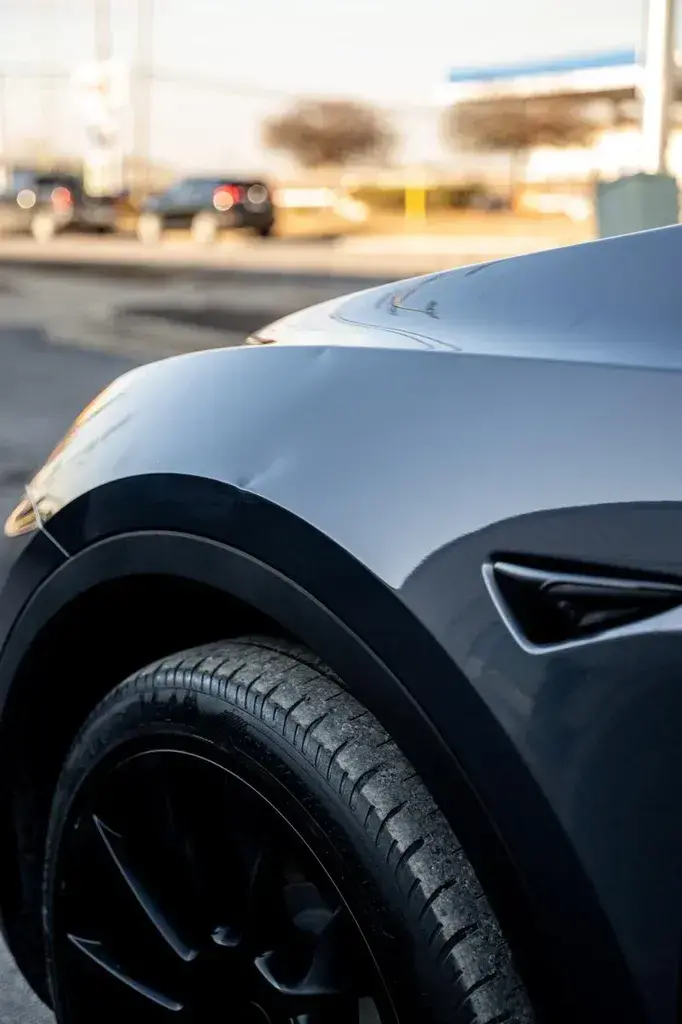
A dim or foggy headlight is one of the easiest fixes before the dark season, and a fender or hood dent from a dusk-time bump is often a candidate for paintless dent repair when the paint is intact. For deer-specific advice, see our deer collision season guide. Our team at EZ Tech Paintless Dent Removal & Collision is happy to take a look and walk you through your options. This article is general information, not legal or insurance advice.
Sources: NIST, “Daylight Saving Time Rules”; timeanddate.com, “Sunrise and sunset times in Chicago, October 2026” and “November 2026”; NBC Chicago, “When does daylight saving time end in Illinois?” (October 25, 2026); AAA, “Road Safety Tips for Daylight Saving Time” (updated October 18, 2026); Ankin Law, “When Clocks Fall Back, Chicago Pedestrian Injuries in the 5 O’Clock Hour More Than Double” (October 23, 2026); Illinois General Assembly, 625 ILCS 5/12-201 and 625 ILCS 5/11-1002; Illinois State Police, “Crash Reports.” Accessed October 27, 2026.
Related services
Headlights looking dim before the dark commutes start? Get your free quote or call us toll-free at (833) 439-8324.