A lot of drivers picture hail damage as golf-ball-size ice smashing into a hood. That does happen, but it is not the whole story. Smaller hail can leave damage too, especially when the storm is fast-moving, wind-driven, or concentrated on broad panels like the roof and hood.
In collision repair and paintless dent repair, the more common question is not whether hail can damage a car, but how much damage is likely from the size that actually fell. A storm with tiny stones may leave no visible marks at all. Another storm with similar-looking hail can leave dozens of shallow dents that only show up once the sun hits the panel at the right angle.
For drivers in the Chicago area, this matters because spring and summer storms can move in quickly, and many cars sit outside at work, in apartment lots, or on neighborhood streets.
Small hail car damage depends on hail size and impact speed
The short answer is yes, small hail can damage a car.
The longer answer is that the chance of visible damage rises as hail gets larger and more energetic. According to the NOAA National Weather Service hail guidance, pea-size hail is considered non-severe hail, while quarter-size hail, about 1 inch across, meets the severe hail threshold. The same NWS guidance also notes that quarter-size or larger hail can dent cars.
That does not mean pea-size hail is always harmless. It means the odds are lower. Real-world storm conditions are messy. Wind, falling angle, panel shape, and temperature can all change the result.
Controlled vehicle panel testing published by SAE International reached a similar point from the engineering side: larger hailstones caused more damage than smaller hailstones at the same speed, and higher impact speed caused more damage for the same hail size. That lines up with what repair shops see after storms.
| Hail size | Weather label | Likely effect on a car |
|---|---|---|
| Pea-size, about 1/4 inch | Non-severe hail | Often no visible damage, though light dents are still possible on flat panels |
| Marble to dime-size | Small hail | May leave scattered shallow dents, usually easiest to spot on roofs and hoods |
| Quarter-size, 1 inch | Severe hail | Visible dents become much more likely |
| Larger than quarter-size | Severe hail | Higher risk of widespread dents, trim damage, and possible glass damage |
What small hail damage looks like on modern body panels
Small hail damage is usually subtle at first. It often shows up as shallow round dimples rather than deep craters. Many drivers wash the car, glance at it, and assume everything is fine. Then they notice wavy reflections on the roof a day later.
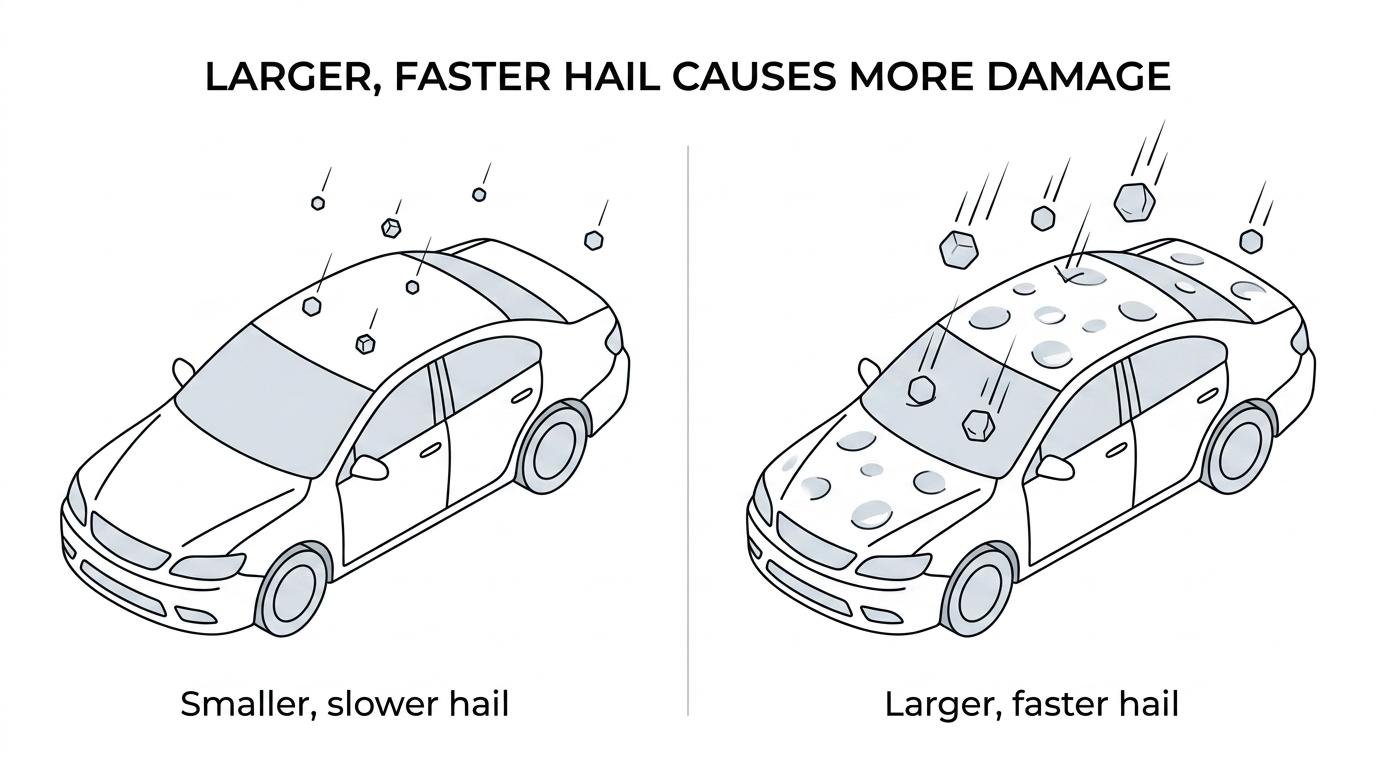
The most common places for small hail dents are the roof, hood, and trunk lid. These are broad, exposed panels that take the direct impact. Doors and fenders may also get hit, though the angle of the storm matters a lot.
Paint damage is less common with classic hail dents than many people expect. In controlled testing, hail impacts generally did not scratch or mark the paint surface, though paint chipping could happen near folds or panel edges. That detail matters because dents with intact paint are often good candidates for paintless dent repair.
A newer vehicle is not automatically safe, either. Some modern panels are lighter and can show dents from impacts that might not have marked older, heavier body panels.
After a storm, the first clues usually look like this:
- small dimples on the hood
- soft ripples in the roof reflection
- clusters of dents above the windshield or rear glass
- isolated marks on the trunk lid
- dents that are easier to see at sunrise or sunset
When small hail is more likely to leave dents on a parked car
Not every hailstorm with small stones damages vehicles the same way. Two storms can produce similar hail diameter but very different repair outcomes.
Wind is a big factor. A fast-moving storm can push hail harder into side panels and increase the effective impact speed on horizontal panels. That extra force may be the difference between no visible mark and a dent that needs repair.
Panel shape matters too. Large, open sections of metal tend to flex more than reinforced areas. The center of a hood or roof is often more vulnerable than a sharp body line or a tight folded edge.
Even the same car can show mixed results. One side may look untouched while the roof carries dozens of marks.
A few conditions tend to raise the odds of small hail dents:
- Strong wind: adds impact energy and changes the strike angle
- Flat panel exposure: roofs, hoods, and trunk lids take the brunt
- Long storm duration: repeated impacts can cover the same area
- Outdoor parking: street and lot parking leave no overhead protection
- Thin or flexible panels: some metals show dents more easily than others
How to inspect a car for hail dents after a storm
A quick inspection right after the storm is smart, even if the hail seemed small.
Start with clean light, not just clean paint. Hail dents hide in poor lighting. Park where you can see long reflections across the roof and hood. Early morning, late afternoon, or a bright overhead shop light works well. Move around the vehicle slowly and watch how the reflected lines bend.
Check the roof first. Drivers often miss roof dents because they are harder to see from ground level. A small step stool or parking garage ramp can help you get the right angle safely. Then inspect the hood and trunk.
Do not focus only on paint chips. Small hail damage often leaves the paint intact, which is good news for repair options, but it also makes the dents easier to miss.
If you think you see damage, take photos the same day. Wide shots help show overall condition, and angled close-ups help capture the dents. This can be useful if you decide to file an insurance claim or get estimates from a PDR or collision repair shop.
A simple inspection routine works well:
- Look at the roof, hood, and trunk in reflected light.
- Check glass, moldings, mirrors, and trim for secondary damage.
- Photograph any dents from more than one angle.
- Save the date of the storm and the address where the car was parked.
- Get an estimate before dents become harder to track or compare.
Does insurance cover small hail damage on a car
In most cases, hail damage falls under comprehensive coverage, not collision coverage.
That distinction matters because many drivers assume any body damage is a collision claim. Hail is generally treated differently by insurers because it is weather-related damage. If the policy includes comprehensive coverage, the repair is usually covered after the deductible.
Whether it makes sense to file a claim depends on the amount of damage, the deductible, and the repair plan. A handful of minor dents may cost less than expected with paintless dent repair. A storm with dozens of marks across several panels can quickly turn into a larger claim.
Leased and financed vehicles often require comprehensive coverage, so many owners already have the protection without thinking much about it until a storm hits. The key step is checking the policy before arranging repairs.
Why paintless dent repair is often used for small hail dents
Small hail damage is one of the most common uses for paintless dent repair. If the metal is dented but the factory paint is still intact, a technician can often massage the panel back into shape from behind or with specialized pulling methods.
That makes PDR appealing for hail because it avoids sanding, filler, and repainting in many cases. Keeping the factory finish is a big advantage for both appearance and resale value.
PDR is not the answer for every hail job. If the paint is cracked, if the dent is stretched badly, or if the hit is near a damaged edge, conventional body repair may still be needed. Some vehicles also need partial disassembly to reach roof rails, braces, liners, and inner structures.
In practice, many hail claims are mixed repairs. One panel may be repaired with PDR, while another needs refinish work or part replacement.
Here is where PDR tends to fit best:
- Paint intact: no cracking, peeling, or exposed metal
- Shallow dents: common with small to mid-size hail
- Accessible panel areas: room for tools or safe glue pulling
- hood dents
- roof dents
- trunk lid dents
What repair shops look for during a small hail damage estimate
A proper hail estimate is more than counting dents.
Technicians usually map the number of dents by panel, note the largest dent size, and check whether the damage sits on open metal, body lines, or reinforced sections. They also look at trim, moldings, antenna mounts, glass, and weatherstrips. A storm that seems minor from the driveway can reveal much more under inspection lights.
Repair shops also pay close attention to panel material. Steel and aluminum do not always react the same way, and access points differ from one vehicle to the next. A panoramic roof, a headliner, or advanced driver-assistance hardware can also affect labor time.
This is one reason estimates after a hailstorm can vary. The visible dents matter, but access, material, and repair method matter just as much.
What to do right after small hail hits your car
If the storm has passed and you suspect damage, the best move is to act while the details are fresh.
Document the date, take photos, and get the vehicle checked before washing away clues or assuming the dents are too minor to matter. Small hail damage can be easy to live with, but it can also be easy to underestimate.
A practical same-day plan looks like this:
- Move the car into good light
- Take roof and hood photos
- Check your comprehensive deductible
- Schedule a PDR or collision estimate
- Ask whether the paint is intact and if PDR is a fit
That quick check can tell you whether the storm left nothing at all, a few repairable dents, or a larger hail claim that is worth handling right away.